Writer E.L. Doctorow is known for using real-life historical figures as characters in his period novels. Best known for his book Ragtime, his novel Loon Lake is now available in paperback. He tells Fresh Air's Terry Gross about the day-to-day work of a writer and how his job as an editor affected his prose.
Democratic senator Paul Tsonga argues that political liberalism has become untenable, particularly with regard to domestic economic policies. He argues for what he dubs "compassionate realism" as a guiding principle for the United States. Fresh Air listeners call in with their questions.
The famed clergyman was involved in anti-war protests during the Vietnam War. He now leads a church in New York City, where he champions the poor, gays and lesbians, and helps organize against the nuclear arms race. Love, he says, is at the heart of his activism.
Journalist and activist Barbara Garson recently spent time with both factory and white-collar workers to learn about how automation, assembly-line methods, and emerging technologies have affected their relationship to their jobs.
The artist says the success of her work rests on her attention to the natural, undirected poses of her subjects. She argues that, to garner artistic merit, a portrait must go beyond straightforward representation.
The accomplished musician is known for singing along with his playing. He demonstrates his unique approach to the instrument, considers the evolving role of the bass in music, and his career in jazz.
Heath Allen was recently commissioned to write new liturgies for the Calvary United Methodist Church in West Philadelphia. His theater piece, Report on a Castaway, features the poetry of Bertolt Brecht.
Baltimore-based filmmaker John Waters has released a new book which explores his love of bad taste in film. With a new movie, Polyester, soon to be released, he join Fresh Air to explain his transgressive aesthetic and share his experiences working on set with a regular crew of actors.
Writer and director Garson Kanin's new book explores the success of certain actor pairings in Hollywood history, arguing that the team members brought out the best in one another.
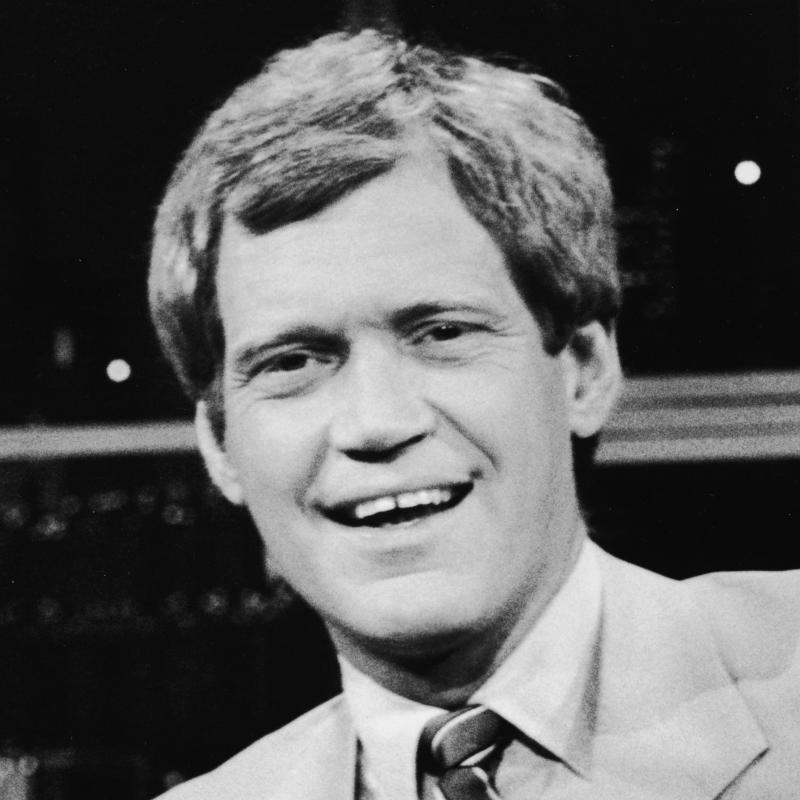
The comedian's morning television program, The David Letterman Show, was recently canceled. Since then, he's been a frequent guest host on The Tonight Show. Letterman explains the differences between daytime and evening programming, as well as how he paid his dues as an up-and-coming comedian.
Humorist Fran Lebowitz talks about her career as a writer and how her choice of profession has affected her personal life. The interview is briefly interrupted by a press conference by President Reagan about the assassination of Egyptian President Anwar Sadat.
The accomplished musician shares his approach to improvisation and teaching. He considers the changing approach and education of younger musicians is affecting the future of jazz.
In light of the current PATCO strike, labor historian Philip Foner discusses recent controversies surrounding strikes by public employees, as well as the history of organized labor in the United States. Fresh Air host Terry Gross invites listeners to call in with their questions.
Two experts on drug trafficking tell Fresh Air's Terry Gross about the difficulties of curtailing the production and sale of illicit drugs that originate outside the U.S. They debate whether or not American support of Burma's ethnic minorities could help reduce opium production.
The historian and prolific writer talks about the influence of communist organizations and movements in the United States and abroad. He is careful to point out the positive influence of communists in American labor movements, and cautions against viewing communism in different countries as a monolithic force.
The jazz and film critic believes that all the methods and techniques filmmakers use to tell a story were ether pioneered or refined by D.W. Griffith. Despite the pervasive racism in the director's art, Williams argues for the preservation of Griffith's legacy.
The Village Voice writer has a new anthology of his music writing called Riding on a Blue Note. His tastes have expanded from jazz to pop vocals, including Bing Crosby and Frank Sinatra. Giddins also finds much to love about contemporary European and avant-garde jazz.